A note from Chris Pandza.
Stories have the power to transform—if only they are shared. Archives shouldn't be places where our most important stories go to rest.
That’s why I’ve built a practice combining computational methods, close reading, and community engagement to make archives more navigable, inclusive, and beautiful than otherwise possible.
After leading some of the world's highest-profile digital oral history projects at the Columbia Center for Oral History Research—including the Obama Presidency Oral History and Baldwin-Emerson Elders Project—I began hearing from organizations sitting on incredible archives that they felt were not living up to their potential. I founded Department of Memory in 2025 to partner with these organizations and create new possibilities for the stories they keep.
My work has enabled organizations to do more with their archives than they thought possible: to produce award-winning websites, make sense of unwieldy collections, develop educational tools, enhance museum exhibitions, support documentary filmmaking and podcasting, and even partner with DJs to create new music by sampling historical records.
These initiatives save staff and researchers time, help audiences discover overlooked content, and make better use of what already exists. When materials are navigable and connected, users and visitors can spend more energy engaging with them—to learn, interpret, and create.
My practice is driven by a deep reverence for and curiosity about the stories people tell about themselves and their world. Whether told by a seemingly ordinary person or a world leader, I aspire to give each story I am entrusted with presidential treatment.
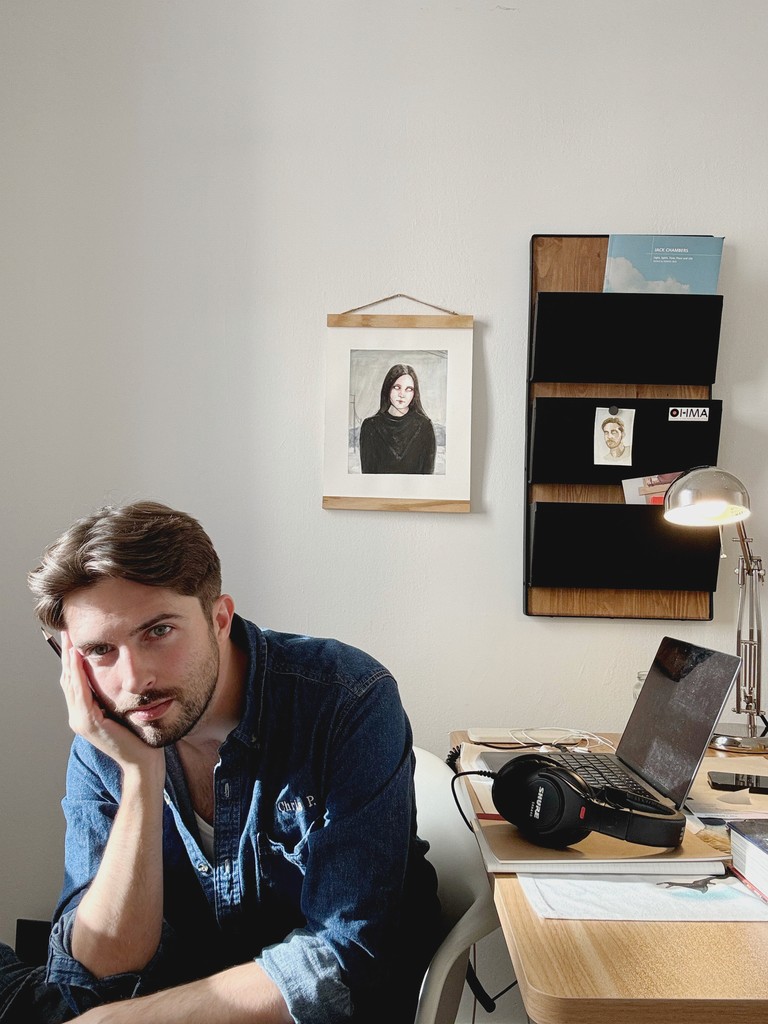
Chris Pandza is a Canadian curator and oral historian using computational methods to center human experience and connection.
Working together
Department of Memory is an intentionally small practice, supporting only a few partnerships per year. Staying small means I can give each collaboration the focused attention, discretion, and care that this work needs.
Partners approach me when they're ready to do more with their collections. Some bring me in at the start of an initiative to lead it from concept to launch; others engage me for proof-of-concept development. When a project calls for other specialized skills, I introduce partners to trusted collaborators. Each partnership looks different and is tailored to the project at hand.
Some of the opportunity areas we address together might include:
Collections that are hard to navigate and curate at scale.
You have hundreds or thousands of hours of testimony. Users spend hours searching because keyword search only gets them so far. Or worse, they miss materials or disengage. The archive has standard metadata—format, date, names—but users want to search by themes, perspectives, and stories. Different audiences need different entry points, but there's no infrastructure to help them find what matters.
Data sources that don't talk to each other.
You have oral histories, documents, survey data, photographs, institutional records in separate silos. Researchers can manually connect a testimony to a related document, but surfacing these relationships at scale—across different themes, time periods, and formats—could reveal insights that manual work alone can't reach.
Seeing what's possible but not knowing how to build it.
You've seen innovative archival work out there. Indexing, topic tagging, time-synced transcripts, the way users can navigate thousands of hours of content with ease. You want to push the limits with your collection but aren't sure where to start or how to build it.
Lesser-known perspectives that could reach further.
You've collected lesser-known perspectives to fill gaps in the historical record, but users gravitate toward prominent names first. The perspectives you worked hardest to include remain harder to discover. Not because they're less compelling, but because there's no infrastructure to meaningfully integrate them.
Questions about how to work with oral history.
You're considering collecting oral histories to add depth to your archive, or you have them but want to know how to conduct them properly, integrate them more effectively, or present them more engagingly.
Interest in using AI but uncertainty about doing it "right".
Artificial intelligence could help with indexing, labeling, topic tagging, and curating at scale—but at what risks? You're interested in experimenting with emerging tools but want to do so ethically and thoughtfully without compromising trust or integrity.
You need a technical parter who understands cultural heritage
Your collection deserves more than off-the-shelf solutions. Department of Memory works with cultural heritage organizations across the United States, providing tailored consulting and computing services—from computer software consultancy and data processing to computer programming, custom software development, design, and implementation. We systematize rich archival information into computer databases, build specialized platforms for discovery and engagement, and consult on the technical infrastructure needed to bring out the best in your collections.
Workshops and education
Teachers, schools, and organizations also engage Department of Memory for educational workshops. These workshops might cover oral history methodology, ethical approaches to artificial intelligence in archival work, or strategies for making collections more navigable.
In 2026 we will also make educational content available online in the form of videos and articles.
Interested in learning more?
Check out related case studies or get in touch.