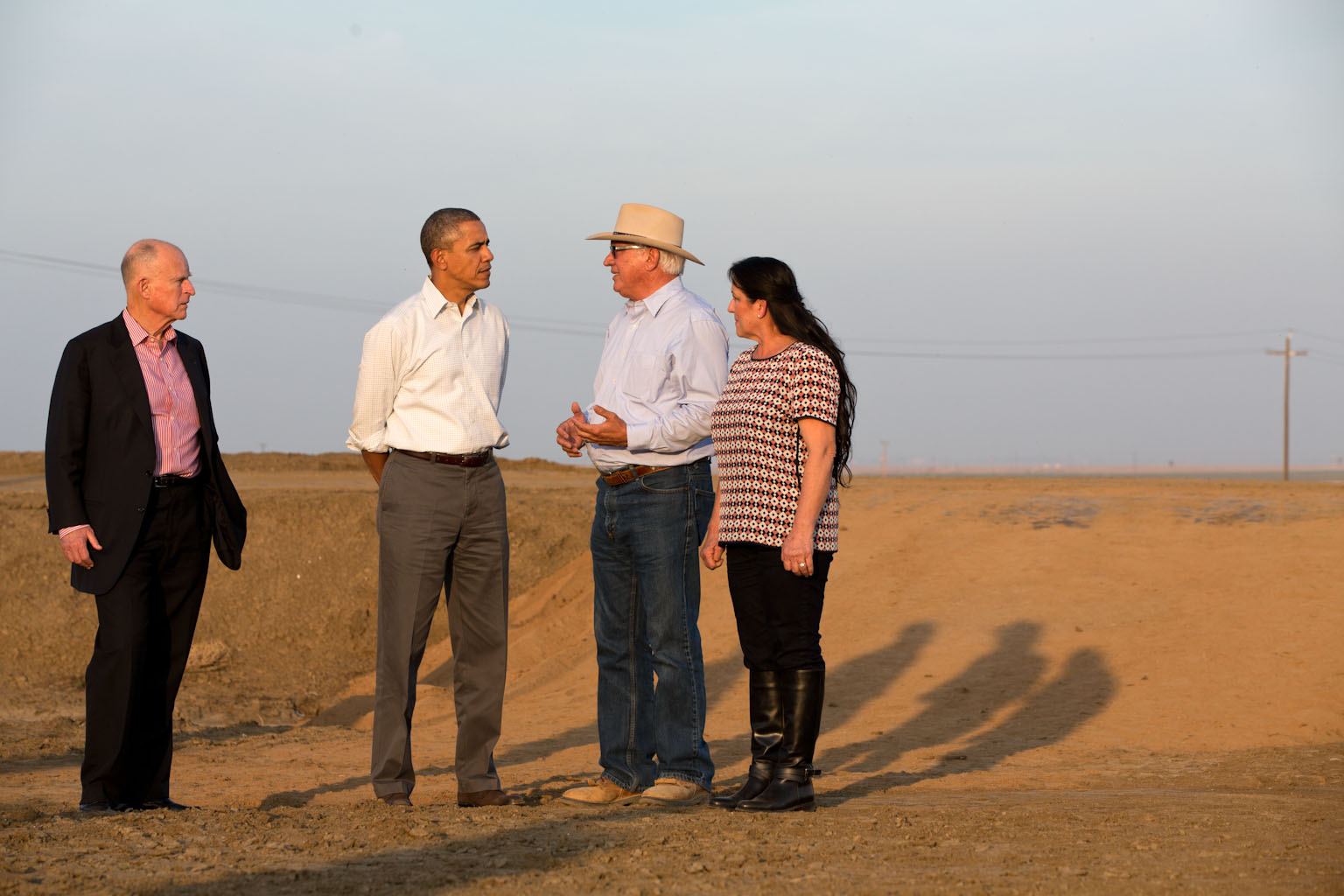
Building the most inclusive presidential history archive of all time
Case study by Chris Pandza, who led the study's digital archive at Columbia University between 2019–2025.
The Obama Presidency Oral History is the official oral history of the Obama presidency, led by Incite Institute and the Columbia Center for Oral History Research.
Between 2019 and 2023, the study's team captured over 450 interviews—from President Obama and White House officials to organizers, activists, and people from all walks of life with organic connections to the presidency. This unprecedented approach allowed 360-degree coverage of key events and domains.
For example, the story of the Affordable Care Act is told through dozens of voices—from White House officials like Nancy-Ann DeParle to union leaders, medical advocates, the chief technology officer who built healthcare.gov, and John Mier, a small business owner who wrote to President Obama frustrated with said website's rollout.
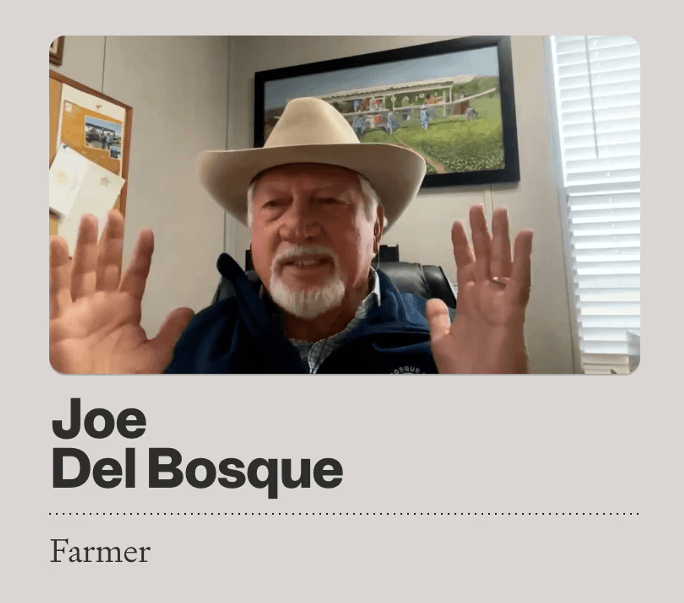
With over 1,000 hours of rich interviews at the end of fieldwork, the Obama Presidency Oral History had the potential to be the most inclusive presidential oral history of all time.
Challenge
I was hired to lead a digital archive for the study that would push how navigable and accessible an oral history archive could be.
Though the study's team collectively knew the interviews in depth, no one person could apprehend the entire archive—1,000+ hours spanning hundreds of perspectives, interconnected in potentially infinite ways. We needed help zooming out, analyzing the structure of what we'd collected, and sharing what we had learned with the public.
Moreover, there were interconnections we couldn't anticipate. Oral history interviews have emergent agendas, and we wanted to organize the collection in a way that honored what narrators wanted to talk about, not just what we set out to find.
And finally, we faced a long tail problem: in an archive anchored by household names like President Obama and his senior staff, how could we encourage audiences to discover and engage with the lesser-known voices whose perspectives are just as crucial?
Building pathways for discovery
Our guiding principle was to center shared reference points—topics, events, policies, places—rather than individual figures. Instead of browsing by famous names, visitors could explore what multiple narrators said about healthcare reform, the 2008 financial crisis, or working in the West Wing. This approach surfaced both prominent and lesser-known voices in the same frame.
We began by transforming the raw interview transcripts into accessible building blocks. Each interview was separated into discrete question-and-answer pairs, creating over 20,000 individual "stories." These stories became the foundation for everything that followed—powering filters, topic pages, and cross-interview connections throughout the study's website.
Rather than imposing predetermined categories onto the interviews, we let the narrators' own agendas guide us. We deployed several natural language processing techniques to "zoom out" from the text, finding common topics and themes between hundreds of testimonies. Moreover, we also surfaced common references to people, places, policies, and events, adding layers of interconnection that cut across topic and theme.
This approach both recovered expected connections and revealed unexpected intersections. Many connections bridged insider and outsider perspectives beautifully, showing how a policy decision in the White House connected to lived experiences on the ground. These cross-cutting themes now serve as filters on the project's website, helping visitors explore multiple viewpoints on the same issue.
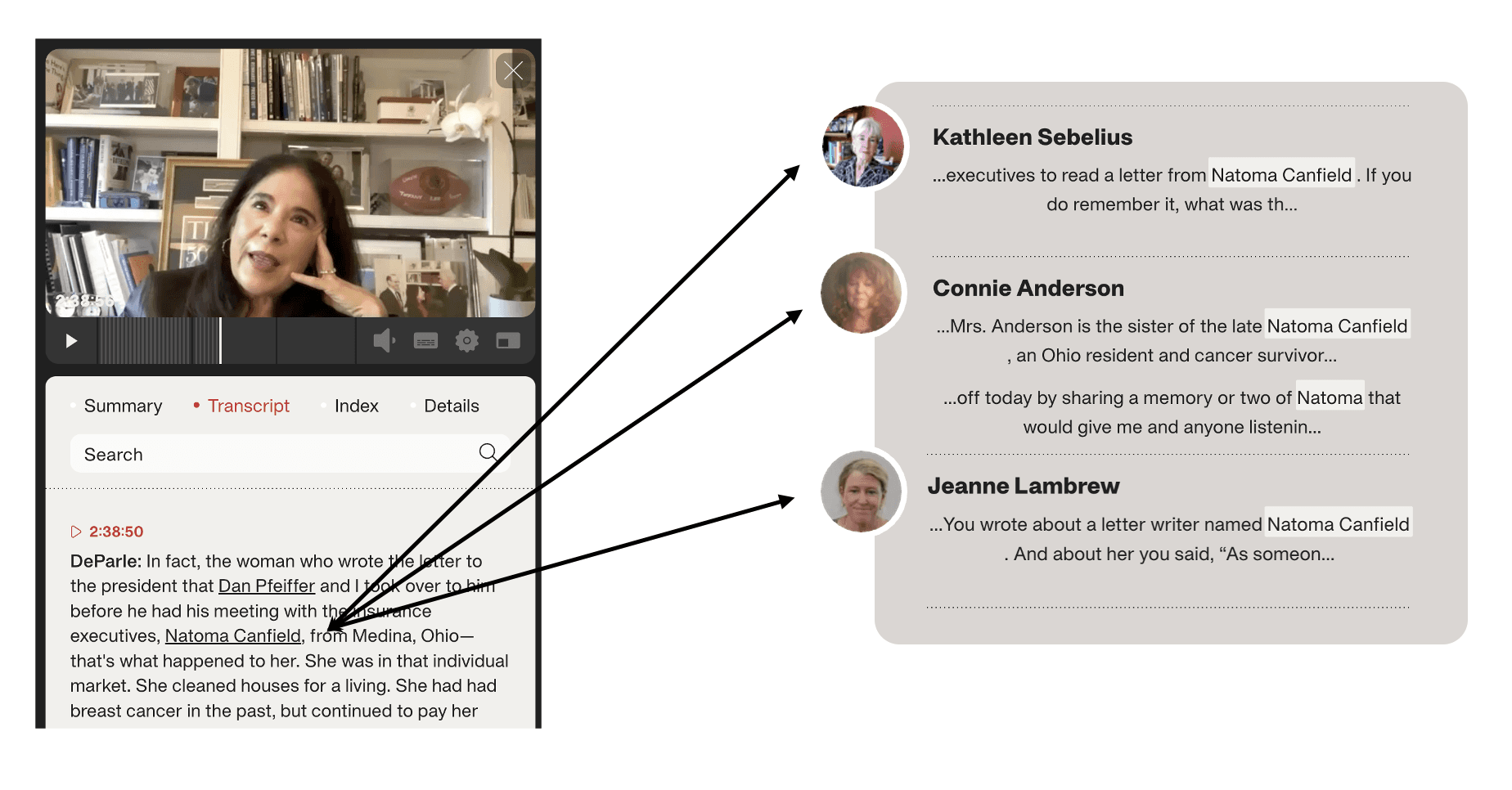
Computational techniques were used to surface and track common references to people, places, policies, and events.
One powerful example: Natoma Canfield, a woman whose personal letter to President Obama about her struggle to afford health insurance became a touchstone in healthcare reform discussions. Her name appears across multiple interviews—from White House staff recounting the president's reaction to her letter, to policy experts discussing how individual stories shaped the Affordable Care Act, to an interview with her sister, Connie Anderson. By tracking these references, we could surface Natoma's story and connect it to the broader policy conversations it influenced.
We enlisted the help of award-winning creative studio Huncwot to give the study visual language and bring it to life online. The cross-references we researched now power interactive features including geographic maps showing where events unfolded, timelines tracking how issues evolved, and an index that links related conversations across the entire archive.
Preliminary results
To date, only 10% of the collection has been released, but preliminary results show that visitors who use the study's innovative tools are twice as engaged, spend more time in the archive, and are more likely to encounter lesser-known perspectives—though robust analysis will require more longitudinal data, as the archive was released in February 2026.
The archive reached audiences far beyond academic researchers, with MSNBC calling the study's website "the greatest of all time" owing to its accessibility and navigability.
A case study with detailed methodology and findings is forthcoming in Oral History Review.
Digital Archive Team
The project was led by Incite Institute at Columbia University and the Columbia Center for Oral History Research. Chris Pandza served as digital producer and curator, with award-winning studio Huncwot as studio partner and Jean-Philippe Cointet of the Sciences Po Médialab providing computational consultation. This work was made possible by many staff and students at Columbia University.
For a full list of contributors, visit the study's website.
Learn more
Visit the study's website.
"Healthy Distance: Critical Computational Curation in Oral History Archives", expanded case study by Chris Pandza for Oral History Review
Article from Art Director Arek Romanski on the site's visual language
Schedule a chat.
Turning documentary filmmaking inside out
An ongoing project with the Kunhardt Film Foundation stands to change the way we experience history.
Making history with America's elders
Building narrative infrastructure to ensure 230+ underrepresented elder voices reach their inheritors—online, on site, and on the dance floor.